


With one-third of our population in school, education is not just a priority – it is a national survival strategy.
Namibia has a population of just over 3.1 million, and nearly one million learners are enrolled in basic education.
This is more than a statistic – it is a mirror reflecting our future. Almost one in every three Namibians is in school, and that reality demands bold decisions today.
This youthful population is our greatest asset, but only if we invest wisely. Education must go beyond buildings and textbooks. We need qualified teachers who are motivated and supported, infrastructure that eliminates overcrowding and ensures dignity, nutrition programmes because a hungry child cannot learn, and digital access because the future economy will not wait for us to catch up. The challenges are even more pronounced in rural areas, where learners often walk long distances to reach schools. Many rural schools lack electricity, proper sanitation, and internet connectivity. Teachers in these areas face isolation and limited resources, making it difficult to deliver quality education.
Addressing these disparities is critical if we are to achieve equitable development.
The government must prioritise rural education by investing in teacher housing, transportation, and incentives to attract skilled educators to remote areas. Mobile classrooms and community learning centres can bridge gaps where permanent infrastructure is not yet feasible. Partnerships with the private sector and NGOs can help provide solar-powered ICT labs, ensuring that rural learners are not left behind in the digital age. As the late Founding President Sam Nujoma reminded us, “The youth are the leaders of tomorrow, and their education is the key to our nation’s prosperity.” These words are not just history – they are a call to action. Education is the foundation upon which Namibia’s future will be built, and every child, regardless of where they live, deserves access to quality learning opportunities.
Education already takes a big share of our national budget, but the scale of enrolment demands more strategic spending. We must invest in teacher housing and incentives, especially in rural areas, expand vocational and technical training so learners have practical skills, and integrate ICT in classrooms, preparing learners for a digital economy. Rural schools should be equipped with basic facilities and digital tools to ensure inclusivity.
Namibia stands at a crossroads. If we educate and empower this generation, we unlock a demographic dividend – a workforce that drives growth and innovation. If we fail, we risk high unemployment, social unrest, and wasted potential. The rural youth hold untapped potential that can transform agriculture, tourism, and renewable energy sectors if given the right skills and opportunities.
Community involvement is also key. Parents and local leaders must champion education by supporting school programmes and encouraging attendance. Traditional authorities can play a role in promoting the value of education, especially for girls, who often face cultural barriers to completing school.
Gender equality in education is not just a moral imperative – it is an economic necessity. The private sector should step in with scholarships, mentorship programmes, and investments in school infrastructure. Corporate social responsibility must go beyond donations and focus on sustainable partnerships that empower schools and communities. Namibia’s future depends on a united effort to prioritise education as the heartbeat of development.
“Education is the most powerful weapon which you can use to change the world,” Nujoma once said.The time to act is now. Our learners are not just the future – they are the present. Let us give them the tools to build a Namibia that thrives. Call to Policymakers: Prioritise education in every policy decision. Make it the heartbeat of national development. Because when we invest in our youth, we invest in Namibia’s survival and success.
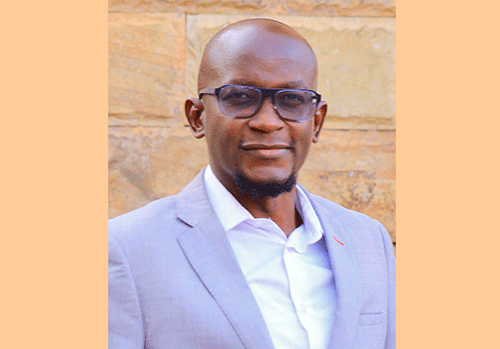
*Indileni Set-Sam Iipinge, is a former Central Committee Member of the Swapo Party Youth League, but writes this in his personal capacity.