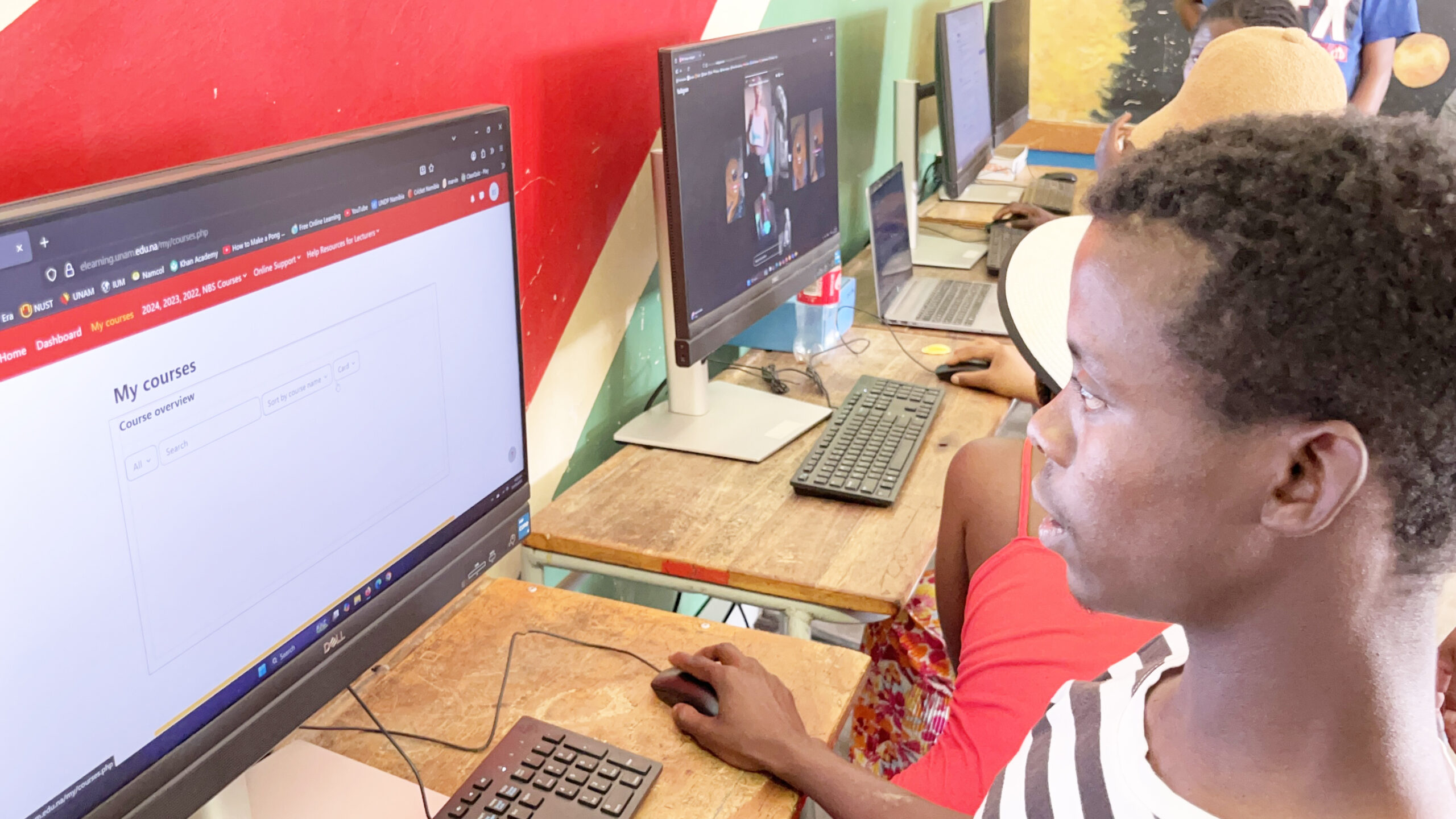

OTJIMBINGWE – For years, residents of Otjimbingwe, a small settlement about 60 kilometres from Karibib, endured the frustration of travelling long distances just to send a CV, apply for a job or access the internet.
Those without computers had to rely on others to type documents or school projects, an exercise that was both costly and time-consuming.
That reality is slowly changing.
Thanks to a partnership between Cricket Namibia and the United Nations Development Programme (UNDP), Otjimbingwe now has computers and internet services at a dedicated classroom at Otjimbingwe Primary School.
What began as a modest initiative by a Peace Corps volunteer has grown into a lifeline for learners and community members alike, opening doors to education, communication and job opportunities.
When we arrived at the computer lab this week, young and old were sitting quietly, glued to their screens.
For learners like Michael Gomachab, the arrival of computers has been nothing short of life-changing.
“I was an indoor kid. But now I come here every three to five days to learn basic steps on how to use the computer,” he says shyly.
Gomachab envisions information technology as a possible career.
“We are very grateful. I can even search for jobs online now,” he added.
The classes are currently free, though Gomachab understands this might change. “No, we don’t pay right now. But once the services that give us internet move on, then maybe we will have to start paying for access,” he said.
Educating a community
Taking up the task of teaching the community is Gerald Shangombe.
He is employed at the school but has also volunteered as the settlement’s information and communication technology teacher.
He said the project is more than just showing people how to use machines – it is about building confidence.
“Some of my students have never touched a laptop before. So, we literally start from scratch – from identifying letters on the keyboard to basic typing and then sending an email. It is challenging but also rewarding because you see people who once felt excluded becoming confident,” he said.
Shangombe hopes the programme will expand further.
“Even something simple like typing your own CV can make a huge difference,” he added.
Dream come true
For Otjimbingwe Primary School principal Johannes !Nowaseb, the computer centre is a dream come true for both the school and the wider community.
He recalled arriving at the school in 2019 and finding only one computer, which learners had to share for class projects.
“What should have taken 10 minutes took two hours. I always thought, what if we had a computer centre at the school? What if our community members could also benefit?” !Nowaseb said.
Today, that dream has become reality.
“After school, our learners are queuing up. Everyone wants to come in, do research, or work on their projects. Instead of driving to Karibib just to send a CV, we can now do it online here. That’s what we wanted, and that’s why we are grateful,” he added.
Digital inclusion
Yrika Maritz, UNDP Accelerator Lab Namibia’s head of experimentation, said the organisation has provided internet services in Otjimbingwe through a pilot project for a Community SDG Impact Lab.
This included one year of uncapped Wi-Fi access to help the community get online.
“The project seeks to create job opportunities, expand access to education and foster digital literacy in rural areas,” Maritz stated.
She added that the initiative is about ensuring that rural communities are not left behind in a fast-changing world.
“We want communities such as Otjimbingwe to have the same opportunities as those in towns and cities. Access to digital resources can open the door to education, employment and even innovation. It is about giving people the tools to build their own future,” Maritz said.