


Rudolf Gaiseb
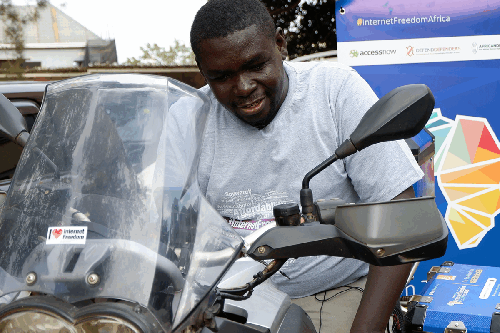
Digital security expert and biker Andrew Gole embarked on a solo motorbike journey through different African countries as part of his #RoadToDigitalSafety campaign to spread awareness about online safety and security last week.
This was ahead of the Forum on Internet Freedom in Africa (FIFAfrica), which kicked off yesterday.
Gole started his trip in Kampala, Uganda, on 12 September 2025, traversing a round-trip distance of 13 000 kilometres through Kenya, Tanzania, Malawi, Mozambique, Zimbabwe and Botswana.
He ended in Windhoek, Namibia, to join the Forum.
“I am truly excited to be hitting the road once again as part of the upcoming Forum on Internet Freedom in Africa.
On my previous trips, I had the privilege of witnessing firsthand how diverse communities warmly embrace digital security as a key practice that empowers and protects their daily lives online and offline.
“These communities are often those left on the margins of mainstream efforts to enhance digital security, yet their eagerness to adopt these measures has been inspiring,” Gole said as he set out on his journey.
Meanwhile, the 12th FIFAfrica is expected to bring together policymakers, activists, journalists, technologists and civil society to debate as well as shape the future of digital rights across the continent.
FIFAfrica is organised by the Collaboration on International ICT Policy in East and Southern Africa (CIPESA) in partnership with the Namibia Ministry of Information Communication and Technology and the Namibia Internet Governance Forum.
CIPESA technology officer Brian Byaruhanga said the Forum positions Namibia as a continental hub for advancing internet freedom, digital inclusion, digital governance, access and affordability. “The Forum has grown into a movement that gathers a diverse assembly of stakeholders from across the continent and beyond. It is illustrative of Africa’s resilience and commitment to ensuring freedom, inclusion and safety online,” he added. Some key themes include digital safety as an everyday priority, inclusive digital spaces for vulnerable communities, such as women, persons with disabilities and youth, bridging Africa’s digital divide and advancing from policy to practice in digital rights.