
Rudolf Gaiseb
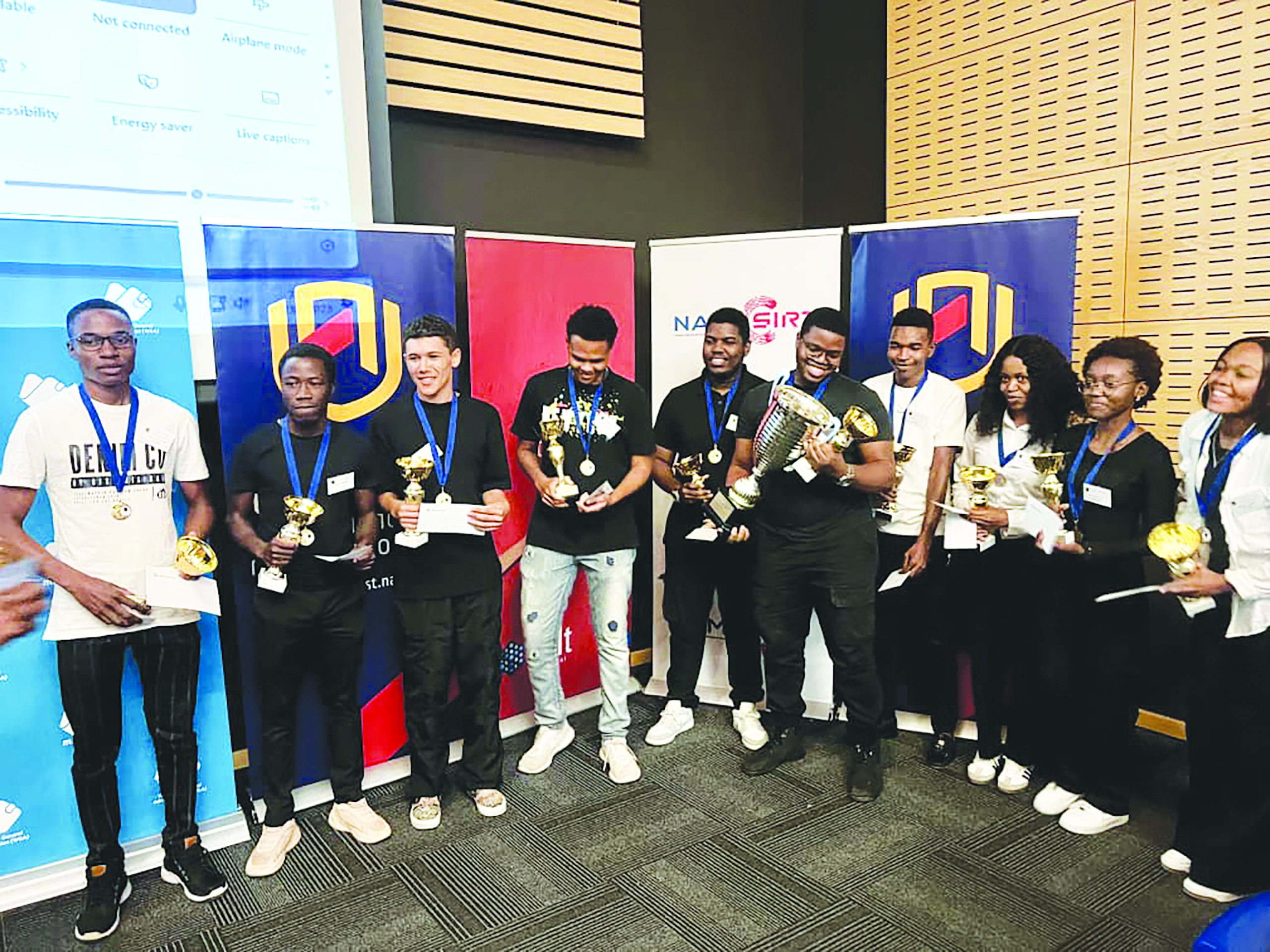
The University of Namibia (Unam) won the 11th edition of the Namibia National Cybersecurity Competition, hosted by the Namibian University of Science and Technology (Nust) alongside its partners over the weekend.
Four higher education institutions participated this year, including Nust, Lingua College and the International University of Management (IUM).
Unam walked away with the first place and N$3 500 cash prize for each team member, courtesy of the Capricorn Group.
Nust secured second place with N$2 500, a cash prize for each participant, after losing points due to disqualification for using gadgets during the competition. They were sponsored by the Communication Authority of Namibia (CRAN).
Lingua College took third place, receiving N$1 500 for each team member, sponsored by MultiChoice Namibia.
The competition’s head judge, Penehafo Nghitamuka, said this year’s contest was tougher than previous years, but the students’ performances were impressive. She said it highlighted that some students are ready for the industry, stating, “They will be able to defend the systems.” Nghitamuka’s only concern was their weakness in writing reports.
“This is a significant gap they need to address. In their writing, their wording was technical rather than strategic,” she said.
The annual competition is run on an attack-and-defend basis, utilising a client-server architecture, and trains students to safeguard network systems. It was held under the theme ‘0 Trust. 0 Compromise: AI Knows!’ Teams are assigned a scenario based on industry-defined problems or projects related to current trending challenges and are tasked with defending the network against attacks from industry security professionals.
The challenges include Capture the Flag and incident report writing, among others.
The competition seeks to raise awareness of both technical and non-technical cybersecurity issues within the information technology community and supports the advancement of system security in Namibia and beyond.
Namibia Cybersecurity Incidence Report Team acting executive Cornelia Shipindo, highlighting the theme, said there is a fundamental shift in how the digital ecosystem is designed, defended and operated. “Artificial intelligence is not merely a tool but a trusted partner in safeguarding networks,” she said. She emphasised that the competition is the flagship programme for enhancing cybersecurity skills, a testament to empowering the next generation of professionals in the sector, entrusted with digital and network systems.
It is the best platform, where theoretical knowledge meets practice, she added.
Meanwhile, Mercy Chitauro, the head of cybersecurity at Nust, encouraged institutions, including schools, to join in the coming years.
“It is important as we mimic real-world scenarios, exposing them to real industry happenings. And introduces them to sponsorships and internships,” she said. Next year, the competition will do outreach programmes to encourage nationwide participation.
-rrgaiseb@gmail.com