
Rudolf Gaiseb
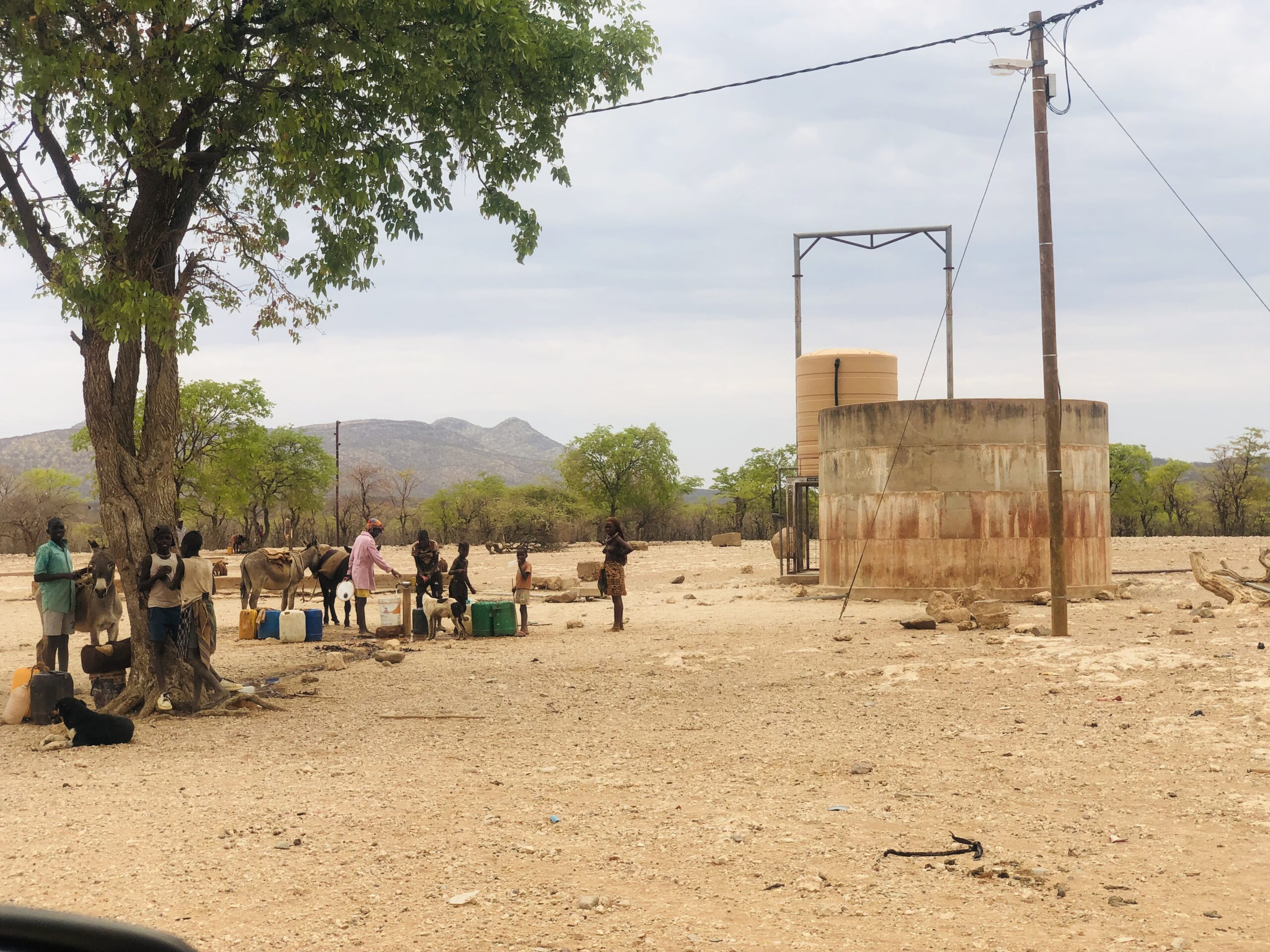
Families in Okarundu 2, near Otjimbingwe, may spend another Christmas without water amid the ongoing water crisis at the settlement. The water shortage in Otjimbingwe and its surrounding settlements is so dire that residents use water from the Swakop River to carry out their daily utilities.
Okarundu 2 and other settlements are not connected to Namibia Water Corporation (Namwater)’s main pipeline stretching from Karibib into the Otjimbingwe settlement.
“Our people are suffering without access to water, our school children are facing challenges at school due to the lack of water, and our animals and gardens are severely affected,” Okarundu resident Theopoldine Nerongo told New Era last week.
The pipeline is part of the N$130 million piped water supply project launched by the Ministry of Agriculture, Water and Forestry in partnership with Namwater in 2014.
The project seemingly promised to solve Otjimbingwe’s water problems, including those of its surrounding small settlements.
When Namwater took complete ownership and management of the Otjimbingwe pipe scheme in 2014 from the Ministry, although the scheme was jointly funded, the ambitious plan was to solve the water woes.
Amid the crisis, Namwater told New Era they are busy implementing “immediate” solutions.
But the residents say that that is a usual sentiment. Nerongo has two children aged five and 15. She said for the past four years, they have not had water during Christmas and this year is likely to be their fifth.
“Our relatives do not want to enjoy Christmas with us anymore,” she said.
The families have returned to using the boreholes that were abandoned when the project emerged.
Prior to the project’s inception, the ministry found the borehole water to be low-quality and unsafe for consumption.
The state of the boreholes and borehole installations was also poor, and some were not operational.
Now, they are in a worse state.
“Namwater does not have water to supply the whole settlement. It is not about illegal connections. They said they will pump 150 m³/h to Otjimbingwe from Karibib. I asked many times how much m³ the Cornershop reservoir holds. But no answer. Why? Because it will reveal the true picture,” she asserted.
Practically, the Otjimbingwe water network is supplied with raw water from the Swakoppoort Dam. The raw water is pumped from Swakoppoort Dam to Okongava.
From Okongava, the raw water is pumped to Karibib Water Treatment Plant (KWTP), where the water is treated to potable standard. The potable water runs to the various reservoirs in the communities via a network of pipes. Cornershop reservoir is one of the many.
But many areas, such as Okatuuo and Otjijere, are not connected to the pipeline and do not get water. For schools, the situation is more unfavourable.
Otjimbingwe Primary School head of department in Otjimbingwe, Antoinette Upi, said the water shortage affects the learners a lot because they can’t keep learners at school where there is no water.
“So, learners will come to school, and if there is no water, we dismiss them immediately. I remember there was a time this term that we stayed away for almost two weeks. There was no water, and there was no school as well.
“During exams, when there is no water, they will write, and then immediately after writing, we dismiss them and send them home,” she said.
The water is off during various times of the day, especially during the morning hours. Or sometimes the whole day.
“You will have water today; for the next three days, there is no water. And then it’s just like that. We also go for a week without water. The longest we had recently was from last Thursday until Monday morning. We didn’t have any water,” she said on Wednesday.
During these times, the residents collect water from the Swakop River.
Outgoing Karibib constituency councillor Melania Ndjago told New Era that the money invested in this project may have been wasted.
All she sees, she said, is water shortages in the area. The pipe is on the surface and bursts frequently.
“It is not climate friendly,” she described it.
The main pipeline includes a steel pipe which runs on the surface and a PVC pipe underground. Namwater spokesperson Lot Ndamanomhata last Tuesday also expanded on the matter, stating that while these illegal connections are making it difficult to ensure that water is applied adequately, the old infrastructure is making the situation worse. This matter was brought to the community on 9 October 2025 during an engagement meeting, alongside the Erongo Regional Council.
Namwater revealed that the vandalism of air valves and fittings compromises water security and system integrity, causing blockages and breakages on the pipelines.
“We are losing water as a result of vandalism. When the pipeline is vandalised, it means that water is not able to reach where it’s supposed to be,” he added.
Nevertheless, Namwater plans to address both the immediate water supply concerns as well as long-term infrastructure challenges.
However, the community noted that some illegal connections resulted from unconnected or incomplete standpipes previously installed by Namwater.
The community members highlighted that they often connect directly to pipelines due to a lack of access to formal connections, as there were no sufficient connection provisions made when the system was constructed.
Ndamanomhata said that while also aiming to formalise users who are on the pipeline, he indicated that residents of those areas that are not connected should enquire at the Namwater office instead of taking the route of illegal connections.
He noted the population in the area has also increased, and the demand is high, putting pressure on both supply and infrastructure.
He added that if consumption is not controlled, there may be a problem.
Ndamanomhata urged that water is not free and costs money to come from one point to the next.
“The water treatment costs have been doubling since 2019, and Namwater has not had a tariff adjustment since 2019, and it’s still expected to supply water at the same rate,” he noted.
Namwater does not receive a yearly subsidy, nor funding on a yearly basis, and it’s still supposed to meet the operations of those activities.
The community members were also urged to comply with the water payments.