


Adolf Kaure
The City of Windhoek has entered a memorandum of understanding (MoU) with the World Wildlife Fund (WWF) to advance sustainable development and environmental stewardship in Windhoek.
This was announced during the latest City ordinary council meeting held recently.
City chairperson of the management committee, Austin Kwenani, said the MoU will allow both parties to jointly develop and implement programmes that integrate environmental sustainability into urban governance and service delivery.
“The City of Windhoek is facing growing challenges such as water scarcity, waste management, and biodiversity loss; an innovative intervention was required to bring viable solutions while promoting community participation, conservation awareness, and sustainable practices,” said Kwenani. He added that “With WWF’s global expertise in sustainable resource management, climate adaptation, and ecosystem restoration, it provides the City of Windhoek with access to best practices and technical support.”
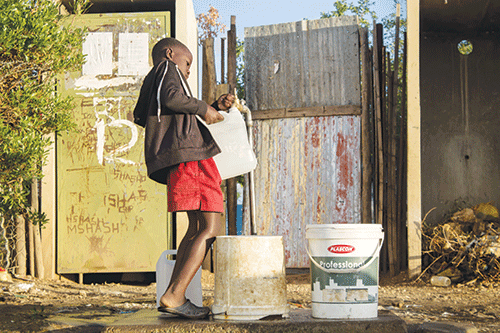
Today, Windhoek continues to manage a severe, long-term water crisis.
This stems from multi-year droughts, with the municipality enforcing strict water-saving measures and relying heavily on emergency, non-surface water sources, such as the Windhoek aquifer and reclaimed water.
Objectives
The collaboration will strengthen the community-based environmental initiatives, ensuring residents are active participants in conservation efforts.
Overall, the partnership will help the city build resilience, achieve its sustainability goals and balance urban development with ecological preservation, fostering long-term environmental stewardship and inclusive growth.
The two parties also agreed to increase environmental awareness and advocacy through education and community engagement, fostering responsible behaviours and active participation in conservation initiatives.
While 2025 saw some, yet insufficient, relief, water demand still significantly outstrips available supply from primary dam systems.
Despite periodic improvements in dam levels, the City remains under strict, sustained, high-category water scarcity restrictions due to low, long-term dam levels and high evaporation rates.
Projections indicate that primary surface water sources (Von Bach, Swakoppoort, and Omatako dams) are insufficient, with up to 70% of demand requiring supplementation from the Goreangab Reclamation Plant and Windhoek Aquifer.
Towards the end of 2025, the City of Windhoek Water Management Plan placed the city under Category D (severe water scarcity), meaning a 15% reduction in consumption for residents.
This also includes banning the filling of swimming pools, restricting garden watering to once a week, and using penalty tariffs for high consumption.
Strategic significance
The partnership will contribute to Namibia’s National Commitments under the Sustainable Development Goals (SDGs), particularly Goal 6 (Clean Water and Sanitation), Goal 11 (Sustainable Cities and Communities), Goal 13 (Climate Action), and Goal 15 (Life on Land). It also aligns with international efforts to build cities that are resilient, inclusive, and environmentally sustainable.
The partnership further aligns with the United Nations Decade on Ecosystem Restoration (2021-2030), which aims to prevent, halt, and reverse the degradation of ecosystems worldwide to combat climate change, enhance biodiversity, and improve human well-being. Under the MoU’s three specified outcomes, efforts are currently in progress to execute initiatives focusing on improving the natural restoration of water sources, which aims to enhance security and promote advocacy for better water stewardship. -akaure@nepc.com.na