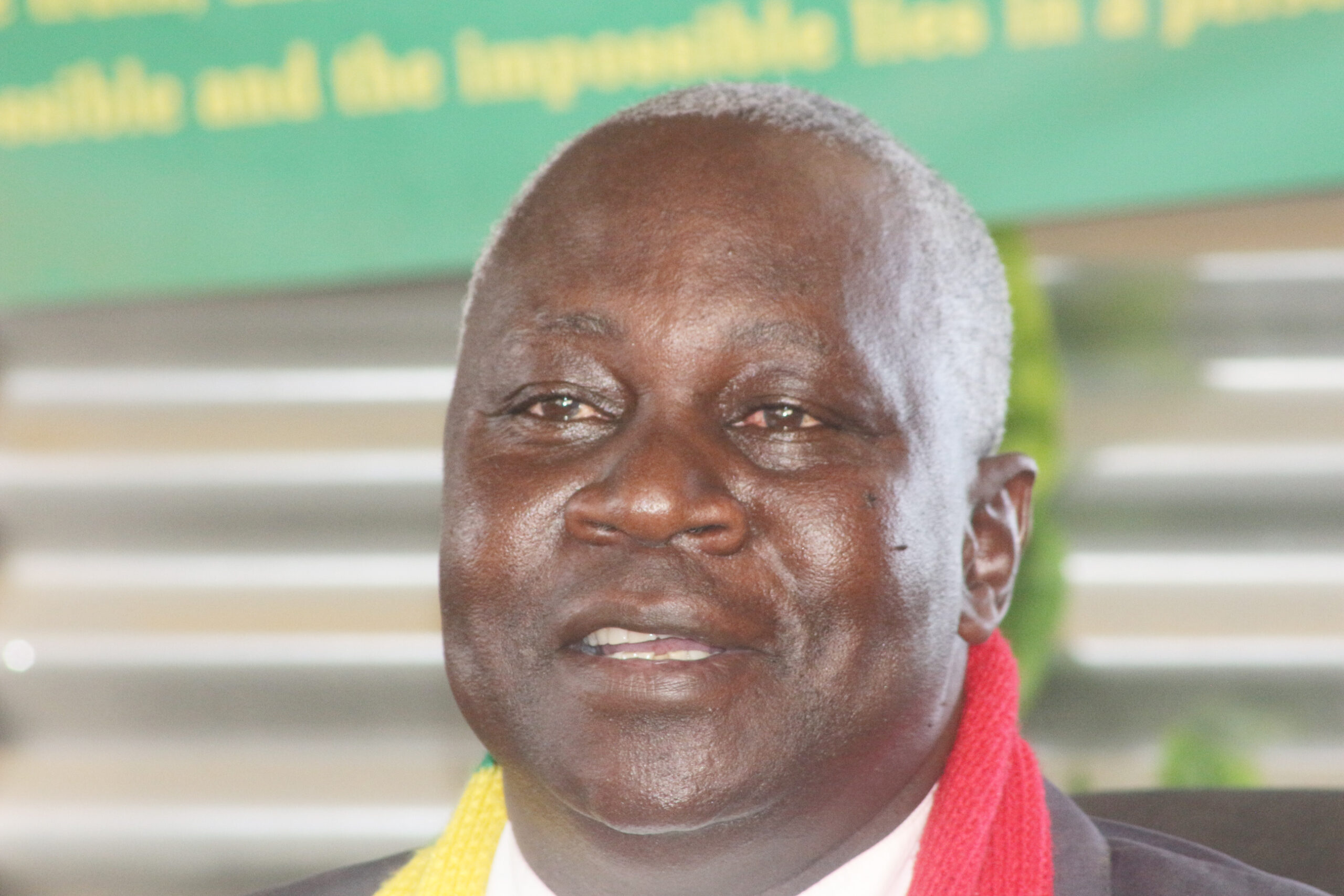

Please allow me a rejoinder to the article that appeared in the Namibian Sun on 6 May 2025, titled ‘28 May is not the date the concentration camps were ordered to close’ by Mitiri Festus U. Muundjua.
Mititiri Muundjua is a person I respect, as I do anyone who is 20 years my senior.
However, without checking the facts with Swanu of Namibia or with me, he opted to play to the gallery.
But in whose interest?
This behaviour, therefore, calls for a rejoinder to dispel the myths, untruths and propaganda about the non-existence of the day of 28 May in 1908 in respect of the closure of the concentration camps.
The rejoinder will demonstrate that the day of 1 April 1908, which he purports to be the closure of concentration camps, is a fallacy and a deliberate distortion of facts.
Without bothering you with the myriad archival sources at the Namibia National Archive, let me refer you to a source that I trust you have on your desk – ‘…the closing of the concentration camps on the 28th of May, 1908’ (Koesler (2015, pg 1, Namibia and Germany Negotiating the Past).
Note, in the Namibia past: In 1908 (28 May), the German colonial administration dissolved the concentration camps which had been erected by order of Berlin on 9 December 1904.
Mitiri Muundjua says May was never mentioned in literature regarding the concentration camps.
To the contrary, May has been mentioned in documents at the National Archive several times.
If you direct your search at Nationalarchiv Windhuk (ZBU) Akte 456 des Zentralbureaus des Gouvernements von Deutsch-Südwestafrika, this could include all pages of interest.
The ordering of the closure of concentration camps, starting with 27 January 1907 to coincide with the Kaiser’s, has never materialised on the envisaged dates.
The orders to close the concentration camps in 1908 were postponed several times due to technical and logistical constraints.
Thus, as an example, the planned closure on 1st April 1908 was postponed first to 15 April 1908, and later postponed until 28 May.
In this respect, consult the Namibia National Archive (ZBU, 456, D-IV-I-3-6p088).
Further, in anticipation of the imminent release of the prisoners, colonial secretary Bernhard Dernbusg addressed the Bundestag on 19 May 1908 on what he thought to be the new relations between prisoners to be released and the new employers, including the role of the native commissioners in this regard.
These show again that May was mentioned in this regard several times, contrary to what he assumes.
My advice to him is, please do visit the National Archives if you are to engage in the discourse about the matters of the day and genocide in general, as well as about the historicity and historiography of genocide.
The original source documents are freely available.
That is what genocide historians ought to do.
As you can see, the work of G Pool (Samuel Maharero), which you have referenced, stopped at the original order of 18 January 1908, J. No 1713.
You did not follow up with research to find out if the order was implemented on that day or not.
Lest we forget, on 26 April 2016, within the hallowed halls of the National Assembly, I, on behalf of Swanu of Namibia, dared to challenge the spectres of our past.
The unanimous agreement reached in March 2020 by all the political parties in Parliament to designate 28 May as our Genocide Remembrance Day was preceded by a countrywide inclusive consultation with all the stakeholders.
On this basis, Mitiri Muundjua, as then Patron of the Ovaherero and Ovambanderu Genocide Foundation (under the Ovaherero Traditional Authority), supported the submission of this Foundation to the Constitutional and Legal Affairs’ Committee of the National Assembly, stating that “it is a day that is common to, especially the foremost-affected communities, the Ovaherero and Nama people, who were incarcerated in those concentration camps, in which many of them succumbed”.
Mitiri Muundjua is now jettisoning this position in the expediency of what is only known to him and his ilk.
If he continues that trajectory, we are likely to witness further disunity and ruptures amongst the Ovaherero and between Ovaherero and Nama peoples.
The other equally important days on the genocide timeline, including 12 January, 11 August, 12 June, 22 April, 2 October, etc., will still be commemorated at the local level, as has been the case over many years.
Therefore, they are not disturbed by the adoption of 28 May.
As per the parliamentary resolution, we now need to support an amendment to the school’s curriculum to include genocide studies, and support the erection of monuments at genocide sites. Advocacy for the amendment of our Constitution, at least in the preamble, to include a recognition of the genocide, is imperative at this stage.
It should be embarked upon.
The government should approach the United Nations to grant this day an observance status like the case with other days, such as the Rwanda Tutsi Genocide, Holocaust and Srebrenica Genocide.
We can only achieve our reparatory justice if we proceed based on an all-Ovaherero and Nama genocide reparations unified front.
*Usutuaije Maamberua is a former member of the National Assembly.