

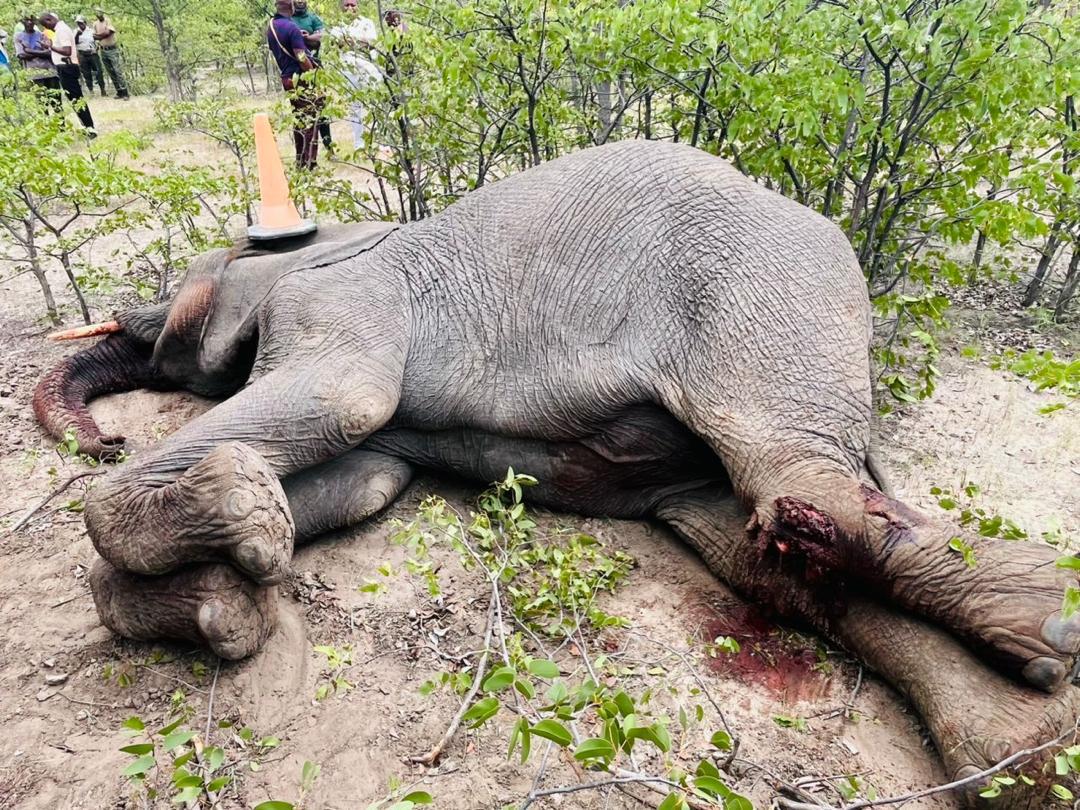

Three people were granted bail of N$800 on Monday at the Okahao Magistrate’s Court after they were arrested for allegedly shooting an elephant that killed a 46-year-old woman last week in the Omusati region.
The accused have been identified as Paulus Wilhelm (23), Ndeshipanda Fillemon Kaapangelwa (51) and Ndinelago Inamugadhimbwa Awala (34). Police said Inamugadhimbwa was initially arrested in connection with the incident.
The victim, Klaudia Mwaala, died on the spot after being attacked by the elephant at Omugulugombashe village in the Tsandi constituency.
The elephant was allegedly shot by the three accused and fell down.
Later, after it killed the victim who was filmed provoking it, it was killed by game rangers from the ministry of environment.
Omusati Police chief Ismael Basson confirmed that a case of illegal hunting was registered.
According to police, the suspects used a .303 hunting rifle to shoot the protected animal.
The elephant, valued at about N$295 000, was later recovered but had sustained injuries. A witness, Johannes Paulus, recounted last week’s event to New Era.
He narrated that he and seven others approached the elephant to take pictures.
During that time, Mwaala first pulled the elephant’s tail, which caused the animal to attack her, but she managed to escape.
“We kept following the elephant. Later, one of the villagers shot it in the leg, and it collapsed,” he said.
Paulus said Mwaala believed the elephant was dead, so she approached it to touch its head while asking others to take pictures.
“The elephant suddenly turned around and attacked her. She was seriously injured, and her intestines were damaged. She died on the spot,” he said.
The spokesperson for the ministry of environment, Vilho Hangula, noted that it is premature to discuss payment of offset amounts to the family, as investigations are still underway.
“However, I would like to clarify that the ministry does not compensate victims of human-wildlife conflict. It only provides assistance in the form of offset payments according to the human-wildlife conflict policy terms and conditions,” he added.